
Best Longevity Essential Oils for Healthy Aging

What if longevity essential oils belong in a healthy-aging routine, but can’t promise a longer life? The distinction matters: appealing wellness language can blur the line between a pleasant personal ritual and a claim that oils prevent aging or change health outcomes.
It’s understandable to be curious about oils while also wanting clear evidence and dependable safety guidance. Labels such as essential oil, wellness oil, and medicated oil can signal different product types, and a natural origin doesn’t automatically make an oil suitable for every person or every kind of use.
This guide will help you understand what longevity essential oils may realistically add to a wellness routine, and what they can’t be expected to do. We’ll look at how to weigh claims, read ingredient and direction information, and consider topical-use safety before trying a product. You’ll also find a thoughtful framework for exploring wellness oils as one small part of a broader approach to healthy aging, alongside habits that support well-being over time.
Key Takeaways
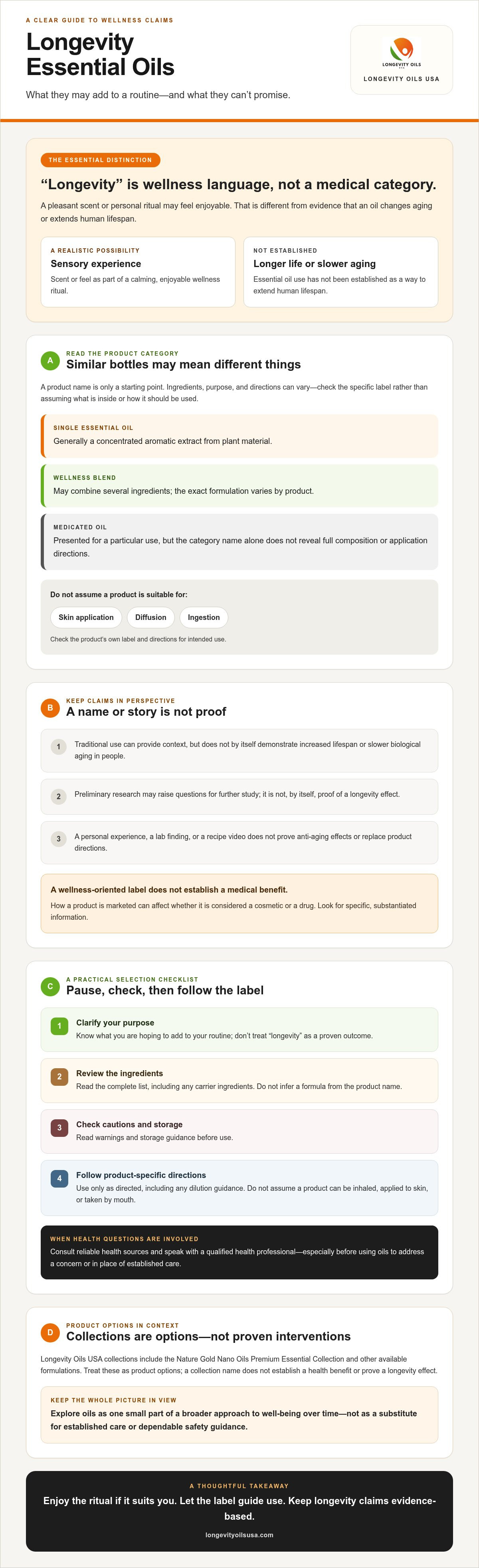
- “Longevity essential oils” is a wellness-oriented phrase, not a recognized medical category or promise of a longer life.
- Learn to distinguish single essential oils, wellness blends, and medicated oils without assuming their ingredients or intended use from a product name.
- Use a simple selection checklist: clarify your purpose, review the label, check cautions, and follow product-specific directions, including any dilution guidance.
- Explore Longevity Oils USA collections, including Nature Gold Nano Oils Premium Essential Collection and other available formulations, as product options rather than proven longevity interventions.
What are longevity essential oils, and what can they realistically support?
Longevity essential oils is a wellness-oriented search phrase, not a recognized medical category. Essential oils are concentrated aromatic extracts obtained from plant material; the phrase “longevity” on a label or product page doesn’t establish what’s inside, how it’s intended to be used, or whether it affects health.
In a personal routine, an oil’s scent or feel may be part of a calming, enjoyable ritual. That kind of sensory experience is different from evidence that a product changes the body’s aging process or extends lifespan.
A short video can show how a creator prepares a facial oil, but a recipe isn’t proof of anti-aging effects or a substitute for product directions.
What does longevity mean in an essential oil context?
Retailers and wellness writers may use “longevity” to suggest vitality, comfort, or a ritual associated with feeling well. Those meanings can vary, so look for specific, substantiated information rather than assuming the term describes a proven outcome. Aromatherapy broadly refers to using essential oils for psychological or physical well-being; Aromatherapy offers an overview of its history and practice. A sensory or routine-based benefit, however, isn’t the same as a measured clinical result.
Are essential oils proven to extend lifespan?
No. Essential oil use has not been established as a way to extend human lifespan. Traditional use can offer context about how people have used aromatic plants, while preliminary research may raise questions for further study. Neither, by itself, demonstrates that an oil increases lifespan or slows biological aging in people.
Be cautious of claims that leap from a laboratory finding, a traditional practice, or a pleasant personal experience to a promise of longer life. A product’s name alone isn’t evidence. For health questions, look to reliable health sources and speak with a qualified health professional, especially before using oils to address a concern or in place of established care. Oils may be explored as one part of a thoughtful wellness routine, without treating them as proven longevity interventions.
How essential oils differ from wellness blends and medicated oils
Similar-sounding bottles can belong to different product categories. A single essential oil, a multi-ingredient wellness blend, and a medicated oil shouldn’t be treated as interchangeable: their ingredients, purpose, and directions may differ. The name on the front is only a starting point. Check the specific label before deciding what a product is for or how to use it.
Essential oils, blends, and medicated oils: what is the difference?
A single essential oil is generally a concentrated aromatic extract from a plant. A wellness blend may combine several ingredients, though the exact formulation varies by product. A medicated oil is presented for a particular use, but the category name alone doesn’t tell you its full composition or how it should be applied. Review each product’s label rather than assuming it’s suitable for skin application, diffusion, or ingestion.
Intended use and claims matter, too. The FDA’s guidance on aromatherapy products explains that how a product is marketed can affect whether it is considered a cosmetic or a drug. A wellness-oriented name doesn’t establish a medical benefit or tell you which use is appropriate.
What can a product label tell you?
Use the package as your practical reference. Look for the information that helps you identify what’s in the bottle, what the maker intends, and what precautions apply:
- Ingredients: Check the complete list, including any carrier ingredients, and don’t infer a formula from the product name.
- Directions and intended use: Look for clear instructions about where and how the product is meant to be used. Don’t assume it can be inhaled, applied to skin, or taken by mouth.
- Cautions and storage: Read warnings and storage guidance, and follow any product-specific instructions.
- Manufacturer details: Check whether the label provides a way to contact the manufacturer if information is missing or unclear.
If directions, cautions, or ingredient details are ambiguous, pause and seek clarification before use. This simple check is especially useful when comparing products described as longevity essential oils, since the phrase doesn’t specify a standard formula or application method.
For more context on wellness oil formats and how to assess them, explore this complete guide to daily vitality with wellness oils.
Longevity oil claims: what evidence supports, and what it does not
A plant-based origin can make an oil feel appealing, but it doesn’t prove that the oil supports longevity or delivers a medical benefit. A scent or topical product may contribute to someone’s personal sense of comfort or make a wellness routine feel more enjoyable. Those experiences are different from measurable changes in health, aging, or lifespan.
Traditional use can suggest what to study, and early research can raise questions, but neither establishes a benefit in people without relevant, reliable human evidence. That distinction helps keep wellness language in perspective without dismissing the value a person may find in a sensory ritual.
How to evaluate research behind longevity claims
Start by matching the evidence to the actual claim. Ask whether research involved people, whether it examined the same ingredient and route of use, and whether it measured the outcome being promised. A study of a purified compound, for example, doesn’t automatically show that a finished oil blend has the same effects. Differences in formulation and use matter.
Also consider what a study can and can’t establish. Preliminary findings may justify further investigation, but they don’t support promises about slowing aging, preventing disease, or extending life. Look for reliable health sources that explain the evidence and its limits. If a claim cites research, check whether that research concerns the same product or only a related ingredient.
What should marketing language not lead you to assume?
Words such as “vitality” and “longevity” may describe a product’s positioning, but they don’t define a clinical outcome on their own. A phrase that sounds health-focused isn’t proof of prevention, treatment, or cure. Look for clear descriptions of what is being claimed and evidence that directly supports that claim, rather than relying on suggestive wording or a natural image.
The same care applies to blends: evidence about one ingredient or one type of use can’t substantiate every product that contains it. Check the specific formulation and the research behind the stated outcome. For a separate perspective on movement and wellness, see this guide to essential oils for active aging. It can provide mobility-related context, but it should not be read as proof that oils change the aging process.
How to choose and use longevity essential oils thoughtfully
A considered choice starts with the product’s actual purpose, not the promise implied by its name. Use this checklist before trying longevity essential oils or any wellness oil:
- Clarify your intended use. Decide what you want from the product, such as an enjoyable scent or a self-care ritual. Don’t treat it as a way to prevent aging or replace health care.
- Review the specific label. Check the ingredients, directions, intended application, and storage guidance on that product. Instructions for one oil or blend may not apply to another.
- Check cautions and personal factors. Look for warnings, and consider whether pregnancy, an existing health condition, medications, or sensitive skin make professional advice appropriate.
- Decide only when the information is clear. If ingredients, directions, or cautions are missing or confusing, seek clarification before use rather than guessing.
What safety checks matter before topical use?
Some essential oils require dilution before they’re applied to skin, but don’t assume a dilution method or amount. Follow the exact product directions. If topical use is permitted, consider testing a small area first and watch for irritation. Stop use if irritation occurs. Keep oils away from the eyes, mucous membranes, and broken or already irritated skin. If you have a reaction, or aren’t sure whether a product is suitable for you, seek medical guidance.
Extra care is sensible during pregnancy, with existing conditions or medication use, and for sensitive skin. A health professional can help you consider personal risks; product wording alone can’t determine suitability for everyone.
How can oils fit into a balanced wellness routine?
If a product’s scent or feel adds enjoyment to your self-care, it may be an optional part of a routine. Keep expectations grounded: oils aren’t a substitute for medical advice or care. Healthy aging is better approached through sustainable habits that may include sleep, movement, nourishing food, and guidance from a clinician who understands your needs.
For product-specific context, read the NANOGIZE Signature Wellness Oil Collection guide, and verify current ingredients and directions on the product itself. To explore the retailer’s wellness oil offerings, browse the wellness oil collections and review each label before choosing.
Exploring Longevity Oils USA wellness oil collections
Once you’ve considered the evidence and checked what information matters on a label, you can compare real product formats without treating a name as a health promise. Longevity Oils USA offers wellness oil collections, medicated oils, roll-ons, and travel-size sets. These are options to explore, not proven treatments or interventions for extending lifespan.
Which confirmed product formats can readers explore?
The catalog includes the NANOGIZE Signature Wellness Oil Collection, Nature Gold Nano Oils Premium Essential Collection, and NANOGIZE Special Ginseng Premium Essential Oil Blend Collection. It also includes medicated oil products, roll-ons, and travel-size sets. These names confirm catalog offerings, but they don’t establish a product’s exact ingredients, application method, or outcome.
Start with the format that may suit your practical needs, then check its directions. A roll-on, travel-size set, wellness blend, and medicated oil may differ in how they’re presented and intended to be used. Don’t assume one is suitable for skin application, inhalation, or another purpose until the specific product information confirms it.
What should you confirm before selecting a product?
Before choosing, review the current product label and information for the individual item. Look for:
- Ingredients: Confirm what the product contains rather than inferring its formula from its name.
- Intended use: Check what the manufacturer says the product is for.
- Directions: Follow the product-specific instructions and don’t transfer guidance from a different oil or format.
- Cautions: Review any warnings and consider whether the product is suitable for your circumstances.
If the product information doesn’t answer a question about its formulation or directions, seek clarification from the retailer before deciding. This is especially helpful if you’re comparing products described with terms such as “longevity” or “vitality,” which don’t by themselves verify ingredients or establish a health effect.
Let the label and your needs guide the choice, not an expectation that an oil will prevent aging or extend life. If a format fits your preferences and the product details are clear, take a calm look through the Longevity Oils USA wellness oil collection.
Make a Thoughtful Choice for Your Wellness Routine
Longevity essential oils are best approached as optional wellness products, not a promise of a longer life or a way to prevent aging. A pleasant sensory experience may complement a personal routine, while claims about health outcomes call for evidence that matches the specific product and use.
Before choosing, check the label for ingredients, intended use, directions, and cautions. Longevity Oils USA’s catalog includes the NANOGIZE Signature Wellness Oil Collection and Nature Gold Nano Oils Premium Essential Collection, along with blends, medicated oils, roll-ons, and travel-size sets. Names and formats can help you compare options, but the product-specific information should guide your decision.
If you’d like to explore the available formats, browse the Longevity Oils USA wellness oil collection and review the current product details before selecting one. Let clarity, care, and your own needs shape your next step toward a balanced wellness routine.
Frequently Asked Questions
Can essential oils really help you live longer?
No. Essential oil use has not been established as a way to extend human lifespan. A pleasant aroma or comforting self-care ritual may feel supportive, but that personal experience isn’t evidence of slower aging or a longer life. Be cautious of products or claims that promise those outcomes. For concerns about aging or health, rely on credible health information and discuss appropriate care with a qualified health professional.
What are longevity essential oils supposed to do?
“Longevity essential oils” is a wellness-oriented phrase, not a recognized medical category with a standard formula or proven lifespan effect. Retailers may use longevity language to suggest vitality or healthy-aging support, but the wording alone doesn’t establish a benefit. A product may be part of a personal sensory or self-care routine. Check its specific ingredients, intended use, directions, and supporting evidence before deciding what it can realistically offer.
Are essential oils and wellness oils the same thing?
Not necessarily. Essential oil usually refers to a concentrated aromatic extract, while “wellness oil” can describe products with different formulations and intended uses. A wellness oil may be a blend, but the label is the best way to confirm its ingredients and directions. Longevity Oils USA offers essential oil collections, wellness blends, medicated oils, and roll-ons, so don’t assume these formats are interchangeable or suitable for the same use.
Can longevity essential oils be applied directly to the skin?
Only if the specific product directions say topical use is appropriate, and don’t assume an undiluted essential oil is safe to apply directly. Some oils may require dilution, but instructions vary by product. Follow the label, keep oils away from eyes, mucous membranes, and broken or irritated skin, and consider testing a small area first. Stop if irritation occurs, and seek medical advice if you have a reaction or are unsure about use.
How do you choose a wellness oil for a daily routine?
Begin with your intended use, then compare products by their listed ingredients, directions, cautions, and format. Choose only a product whose instructions suit how you plan to use it, and don’t rely on terms such as “vitality” or “longevity” as proof of a health outcome. If the label leaves important questions unanswered, seek clarification before use. Keep any oil routine optional, rather than using it in place of health care.
Are essential oils safe to use every day?
There isn’t one daily-use rule that applies to every oil or product. Suitability depends on the specific formulation, route of use, directions, and individual circumstances. Follow the product label and stop using it if irritation or another unwanted reaction occurs. Ask a qualified health professional for guidance if you’re pregnant, have a health condition, take medication, or have sensitive skin. Don’t increase frequency or amount beyond the product’s instructions.
What should you check on an essential oil product label?
Review the ingredient list, intended use, application directions, cautions, and storage guidance. Check whether the label explains how the product should be used, rather than assuming a bottle is suitable for skin application, inhalation, or ingestion. Look for manufacturer contact information in case you need clarification. If ingredients or directions are unclear, pause and ask the retailer or manufacturer before trying the product. A product name alone can’t confirm its formula or purpose.