
How to Choose a High Quality Medicated Oil Shop: A Buyer Checklist

A persuasive label can tell you less than a clear ingredient list and straightforward directions. Choosing a high quality medicated oil shop can feel difficult when product details are vague or marketing sounds more medical than the evidence shown. It’s reasonable to want to know what an oil contains, how it’s intended to be used, and whether the seller sets realistic expectations.
A practical checklist makes those questions easier to answer. Use it to assess product transparency, responsible claims, seller credibility, and whether a format fits your preferences. It can help you compare options without relying on hype or assuming every oil is right for everyone.
Compare individual oils, roll-ons, wellness collections, and multipacks by checking the current listing and label for ingredients, quantity, directions, and warnings. Whether you’re considering Eagle Gold Refresh Medicated Oil, Eagle Global Medicated Roll-On, or another option, apply the same checks. Clear information won’t guarantee a product is suitable for you, but it can help you make an informed choice and identify what to verify before buying.
Key Takeaways
- A high quality medicated oil shop makes product information and seller policies easier to assess than premium-sounding marketing.
- Use six practical checks to spot missing product details and distinguish visible facts from claims that need further support.
- Compare oils, roll-ons, and sets by format, quantity, directions, warnings, and how each aligns with your preferences.
- Follow a five-step process, from defining your intended use to reviewing seller policies, before deciding what to consider.
- Apply the same checklist to Longevity Oils USA’s medicated oils, roll-on, wellness collections, and sets, checking each listing for details relevant to your needs.
What Makes a High Quality Medicated Oil Shop Worth Trusting?
A polished label and words like “premium” or “natural” may make an oil sound appealing, but they don’t tell you what’s inside or how it’s intended to be used. A high quality medicated oil shop makes those details easier to find and separates product information from promotional language. Look for clear descriptions, responsible claims, and seller policies you can review before placing an order.
Shop quality is about the information and purchasing experience, not proof that a product has a particular medical effect or will suit you. This checklist can help you compare sellers and identify unanswered questions, but it can’t replace advice from a qualified healthcare professional. Seek professional guidance if you have a health condition, use medication, or are unsure whether a product is appropriate for you.
What should a medicated oil shop disclose?
Start with the product listing and label. Where provided, check that they identify the product and format, state the quantity, list ingredients, and explain directions and warnings. A useful description should make clear what the item is, rather than relying on broad promises about wellness or vitality.
Next, review the seller’s policies. Look for accessible information about shipping, returns, and how to contact the seller. If a detail is missing, hard to interpret, or inconsistent between the listing and label, treat it as an open question, not an assurance. Ask the seller to clarify before ordering. If you can’t get a clear answer, compare another listing.
What does “medicated oil” mean on a product page?
The words “medicated oil” alone don’t establish a product’s regulatory category, ingredients, or medical effect. Products described with oil terminology can differ in composition and intended use. For basic context on one category, Essential oil provides an overview of essential oils and their properties, but it doesn’t verify a specific product or seller.
Read the exact label and product details rather than assuming similar-sounding items are alike. Traditional use, customer testimonials, and confident marketing statements may explain how a product is presented, but they aren’t clinical proof of effectiveness. Give more weight to details you can check, and note what remains unclear.
You don’t need to resolve every question alone. The goal is to separate stated facts from claims, confirm important details, and make a decision with realistic expectations. Apply those standards consistently across listings and sellers.
The Checklist: Six Product-Quality Signals to Verify Before Buying
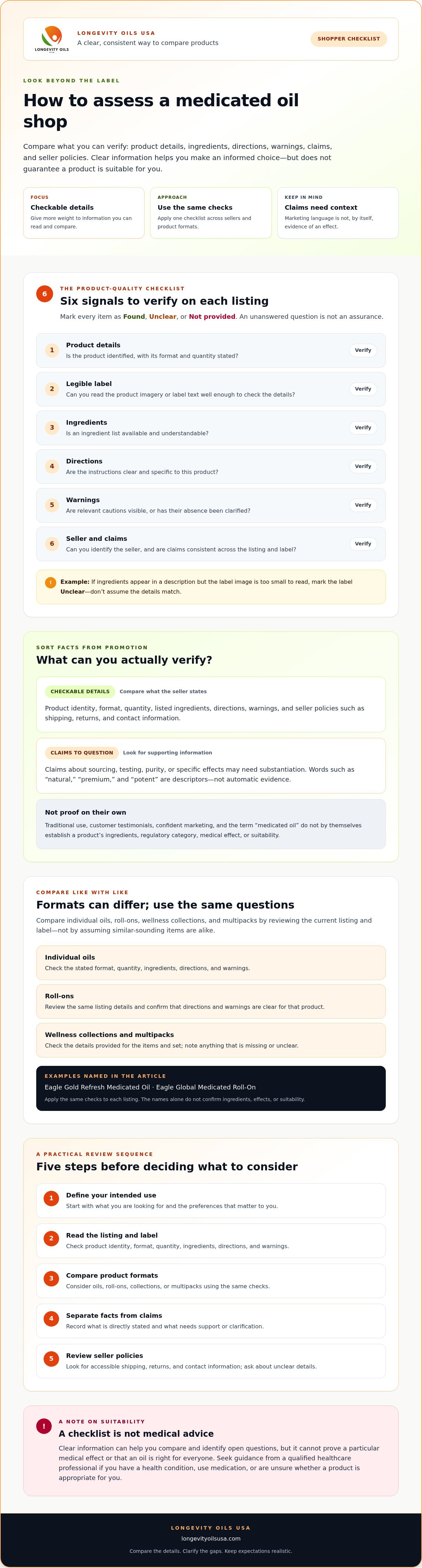
Use the same six checks for each listing so polished branding doesn’t distract from missing information. Record what you can verify directly and what still needs an answer. A complete ingredient list helps you compare products, but it doesn’t prove effectiveness or establish that a product is safe for everyone.
Quick comparison: Mark each item as found, unclear, or not provided.
- Product details: Identity, format, and quantity are stated.
- Legible label: Product imagery or label text can be read.
- Ingredients: The ingredient list is available and understandable.
- Directions: Instructions are clear and specific to the product.
- Warnings: Relevant cautions are visible, or their absence is clarified.
- Seller and claims: The seller is identifiable and claims remain consistent across the listing and label.
How can shoppers assess ingredients and directions?
Look for an ingredient list and product-specific directions before buying. If the listing includes package images, compare the visible details with the written description. For example, if ingredients are named in the description but the label image is too small to read, mark the label “unclear” instead of assuming the two match. Ask the seller to clarify ingredients, instructions, or warnings you can’t confirm.
Readable details show what the seller is communicating; they aren’t independent proof of quality or suitability. Keep that distinction clear in your notes.
How should shoppers evaluate wellness and quality claims?
Separate checkable details, such as stated quantity or listed ingredients, from claims that need substantiation, such as sourcing, testing, purity, or specific effects. Words like “natural,” “premium,” and “potent” are descriptors, not automatic evidence. Ask what supports a claim and whether the seller provides information you can assess. For broader context on essential oils and safety, consult the National Cancer Institute’s information on aromatherapy.
Be especially cautious with disease-treatment promises. Don’t treat testimonials, traditional use, or confident wording as clinical proof, and don’t repeat a medical claim as fact unless it has been independently verified and is appropriate to the product.
Check that the seller is identifiable and that product claims are consistent across the description, label, and other shop information. If details conflict or are absent, note the gap and seek clarification before ordering. You can use this checklist while reviewing Longevity Oils USA product listings, just as you would with any retailer.
How to Compare Medicated Oil Shops, Product Formats, and Seller Policies
After reviewing individual product details, compare listings side by side. A high quality medicated oil shop should make it possible to assess more than branding. Note the format, quantity, directions, warnings, and policies that apply to your order. Use the table below as a comparison framework, filling it in for each option. Mark missing information as a question rather than making an assumption.
| What to compare | Single oil | Roll-on | Set or multipack |
|---|---|---|---|
| Product details | Is the specific item clearly identified? | Is the product and format named? | Are the included items listed? |
| Format and quantity | Can you confirm the package quantity? | Is the package quantity stated? | Are contents and quantities specified for each item? |
| Directions and warnings | Are product-specific instructions and cautions available? | Are instructions clear for this format? | Can you find details for each product in the set? |
| Seller policies | Can you find current shipping, return, contact, and order terms? | ||
Which product format fits your routine?
A single oil lets you focus on one listed item, while a roll-on offers a portable format that some shoppers may prefer. For example, compare the listing details for Eagle Gold Refresh Medicated Oil and Eagle Global Medicated Roll-On rather than assuming their formats, directions, or intended uses are interchangeable. Follow the directions for the specific product you’re considering.
A set brings several listed items together, but the format alone doesn’t imply added efficacy or value for your needs. Check the contents and quantities, then consider your preferences: one product to assess, a format you can carry, or several options to review.
Which seller policies deserve a closer look?
Before ordering, review current product and policy pages for shipping terms, returns, ways to contact the seller, and any conditions that apply to an order. For a bundle or multipack, confirm that the listed contents and quantities match what you intend to purchase. Don’t assume shipping is free, a return will be accepted, or a particular support option is available unless the current terms say so.
Keep your comparison grounded in verifiable details, not assumptions based on a product’s name or packaging. If you’re looking for symptom-focused background, read this medicated oils for muscle and joint soreness guide, then assess each product’s own label and directions separately.
A Step-by-Step Checklist for Choosing a Medicated Oil Shop
A consistent process helps turn browsing into a considered decision. Before comparing listings, write down your preferred format and intended use in your own words. This helps you focus on relevant product details without assuming a particular oil will meet a health need.
- Define your needs. Note what you’re looking for, which format you prefer, and any practical considerations, such as portability.
- Shortlist products. Compare a small number of listings that appear to match those preferences. For multipacks, include only options whose contents you can identify.
- Inspect product details. Check the exact product identity, ingredients, quantity, directions, and warnings. Compare listing information with the label when it’s readable.
- Check seller policies. Review current shipping, returns, contact options, and order terms. Confirm any bundle contents and quantities before ordering.
- Decide or pause. Proceed only when the information you consider important is clear enough to assess. If a material detail is missing, inconsistent, or hard to verify, ask the seller or keep comparing.
What should you confirm before adding an oil to your cart?
Match the product’s stated format and quantity to your preferences, then read its directions and warnings carefully. Check whether the listing explains the ingredients and intended use in clear, product-specific language. If you’re comparing packs, the premium botanical oil pack buyer’s guide can offer another framework for reviewing pack details.
Pause if key information is unavailable or the product page and label appear to conflict. Contact the seller with a specific question, such as whether the directions shown apply to the exact item in the listing. A clear response may resolve the gap. If it doesn’t, wait rather than guess.
When should you ask a healthcare professional?
Shop details can help you evaluate a listing, but they can’t determine whether a product is appropriate for your personal circumstances. Ask a qualified healthcare professional about health concerns, possible medication interactions, or individual suitability. Review the product-specific warnings as well, and seek professional guidance rather than using an oil as a substitute for medical care.
Once you know what you want to verify, you can review Longevity Oils USA’s oil listings. Apply the same steps to each option and let clear details, not pressure or appealing language, guide your decision.
Explore Longevity Oils USA After Your Checklist Is Complete
With your comparison criteria in hand, apply them to current product listings. Longevity Oils USA offers several categories to review, including medicated oils, a roll-on, wellness oil collections, and sets. These formats give you different options to compare, but they don’t mean every product will match every preference or need. Evaluate each item on its own details, just as you would when assessing any high quality medicated oil shop.
How to browse the Longevity Oils USA catalog
Start with the format you noted earlier, then review the current listing for the exact product identity, quantity, ingredients, directions, warnings, and intended use. For example, the catalog includes Eagle Famous Green Medicated Oil and various wellness oil options. Their names alone don’t confirm ingredients, directions, or suitability, so check each product page and label rather than drawing conclusions from the category.
If you’re considering a specific wellness formulation, the product guide may provide additional context. Use it alongside the current product listing, and verify important details directly before ordering. Product information and seller terms can change, so review current pages for order conditions as well as product specifics.
What to do if you still have questions
If a listing doesn’t clearly answer a material question about the product, contact the retailer and ask about that specific item. For instance, ask where to find its complete ingredient list or whether the directions shown apply to the exact format you’re viewing. Consider a detail confirmed only when you can verify it, and don’t feel obliged to order while a meaningful question remains unanswered.
Discuss questions about personal suitability, health concerns, or possible medication interactions with a qualified healthcare professional. Product listings can provide details for review, but they can’t replace individualized medical guidance.
Take your time, compare the information, and choose only when the details and terms are clear to you. You can review current categories and listings in the Longevity Oils USA shop.
Choose with Clarity, Not Hype
A thoughtful choice starts with information you can verify. Compare each product’s identity, ingredients, quantity, directions, and warnings, then check seller policies and note anything that remains unclear. A high quality medicated oil shop should make those details easier to assess, but clear listings don’t establish medical effectiveness or personal suitability.
Longevity Oils USA’s catalog includes medicated oils, wellness collections, sets, and a roll-on format, including Eagle Gold Refresh Medicated Oil and Eagle Global Medicated Roll-On. Review each listing individually, and consult a qualified healthcare professional if you have questions about health concerns or whether a product is suitable for you.
Ready to apply your checklist? Explore the Longevity Oils USA collection and compare product details. Take your time, ask questions when needed, and make a decision based on clear expectations.
Frequently Asked Questions
How can you tell if a medicated oil shop is trustworthy?
Look for clear product descriptions, readable labels, accessible seller information, and policies you can review before ordering. A high quality medicated oil shop should make it easier to check a product’s identity, format, quantity, ingredients, directions, and warnings without relying on sweeping wellness promises. Compare listing details with package images where possible, and ask the seller about material gaps. If details remain unclear or conflict, pause before buying.
What should I look for in a medicated oil ingredient list?
Check that the ingredient list is available and specific enough to help you understand what the product contains. Note unfamiliar ingredients and any listed fragrance, carrier oils, or cautions that may matter to you. Compare the listing with the package label if it’s readable, and ask the seller about inconsistencies or missing details. Ingredient transparency helps you compare products, but it doesn’t prove effectiveness or establish that an oil is suitable for everyone.
Are medicated oils FDA approved?
Not necessarily. “Medicated oil” alone doesn’t identify a product’s regulatory category or show that the FDA has approved it. Classification depends on a product’s ingredients, intended use, and claims. A product marketed to treat or prevent disease may be regulated as a drug, while other oil products may fall into different categories. Don’t assume approval from a product name or shop description; check the specific product’s classification and claims.
Can medicated oil be used with prescription medication?
Ask your prescriber or pharmacist before combining an oil with prescription medication, especially if you’re unsure about its ingredients or how it will be used. Interactions and suitability depend on the specific product and your circumstances, so a general online description can’t confirm that a combination is safe for you. Read the product’s directions and warnings, share the ingredient list with a qualified professional, and follow their guidance before use.
How do you compare medicated oil roll-ons and bottles?
Compare the product-specific directions, warnings, quantity, and application format rather than assuming a roll-on and bottle work the same way. A roll-on, such as Eagle Global Medicated Roll-On, may suit someone seeking a portable format; a bottled oil may match another shopper’s preference. These format differences don’t establish that one is more effective. Follow the instructions for the exact product, and check the label before use.
What should I check before buying medicated oil online?
Confirm the product name, format, quantity, ingredients, intended use, directions, and warnings. Then review the seller’s current shipping, return, contact, and order terms. For a set or multipack, check the listing for the exact contents and quantities. If an important detail is missing, inconsistent, or difficult to verify, contact the seller before ordering. For health or suitability questions, consult a qualified healthcare professional rather than relying on marketing copy.
Can medicated oils treat muscle or joint pain?
You can’t determine from the phrase “medicated oil” alone whether a product treats muscle or joint pain. Review the exact product claims and available supporting evidence, and don’t treat testimonials or traditional use as clinical proof. A marketing claim isn’t a personal diagnosis or assurance of results. If pain persists, worsens, or raises health concerns, seek advice from a qualified healthcare professional. Don’t use an oil as a replacement for recommended medical care.