
Natural Oils for Physical Well-Being: Benefits, Uses, and Safety

What if choosing an oil for physical comfort depended less on its “natural” label and more on what it contains, how it’s meant to be used, and how your body responds? Interest in natural oils for physical well being is understandable: a topical product can be part of a personal-care routine, but broad wellness claims don’t always reflect what the evidence shows.
It’s easy to confuse carrier oils, concentrated essential oils, and medicated oils. They can differ in purpose, directions, and precautions, so one format isn’t automatically a safe or suitable substitute for another. And “natural” doesn’t guarantee a product will agree with your skin.
This guide explains common oil formats and their intended uses, offers ways to assess claims, and outlines checks for labels, directions, and sensitivities. Whether you’re considering a simple topical oil or a concentrated blend, make a choice that fits your routine without treating an oil as a proven remedy or a replacement for medical care.
Key Takeaways
- Natural oils for physical well being is a broad wellness phrase, not a promise of a specific health outcome.
- Compare topical, essential, and medicated oil formats by intended use, application, and personal preference.
- Assess wellness claims carefully: evidence about one ingredient or use doesn’t automatically support every product claim.
- Before applying an oil, read its directions, confirm the permitted route, and watch for skin reactions.
- Choose based on your routine, the product label, and your own tolerance before considering a brand or bundle.
What Natural Oils for Physical Well-Being Can, and Cannot, Mean
Natural oils for physical well being is a broad wellness phrase for oils people may include in personal care or sensory routines. It isn’t a medical term, a defined treatment, or a guarantee of a particular result. The phrase alone also doesn’t tell you what a product contains or how it should be used.
That distinction matters because topical oils, essential oils, and medicated oils can differ in formulation, purpose, directions, and claims. Start with the product label to understand its intended use. Don’t rely on the general word “oil” to tell you how to apply it.
For an overview of essential oils and common uses, see this reference. A general overview can’t replace the directions or cautions for a specific product.
To see a basic introduction to essential oil use, watch this video:
How do topical oils, essential oils, and medicated oils differ?
Topical oils are products applied to the skin when their directions permit it. Essential oils are concentrated aromatic materials; “natural” doesn’t mean they’re ready to apply directly to skin. Dilution or other precautions may be needed, so follow product-specific guidance. Medicated oils may have specific labeled directions and claims. Check the label rather than assuming that one type of oil can be used like another.
What physical well-being can reasonably include
Well-being can refer to everyday comfort, personal care, and routines that feel pleasant and sustainable. An oil’s texture during skin care or its scent as part of a sensory routine may shape someone’s personal experience. That experience is not evidence that a product treats a health condition.
Keep the purpose clear: cosmetic or sensory use is different from a treatment claim. For focused information about labeled uses and cautions, read our article on medicated oils for muscle and joint soreness. Oils shouldn’t replace medical advice or care when you have a health concern.
How Natural Oils Are Used in Everyday Wellness Routines
There isn’t one routine that suits every oil. Start with the product format and directions, then consider the role you want it to play, such as skin care, a massage routine, or an aromatic experience. Scent, texture, ease of application, and personal preference can help you decide whether a product fits your routine, but they don’t prove a medical effect.
Use and precautions depend on the product’s formulation and route of use: an oil intended for skin may have different directions from one intended for aromatic use. The label should make its permitted use clear. Don’t assume you can apply, inhale, or use a product another way simply because it’s an oil.
Topical application, massage, and personal-care routines
Use a product on your skin only when its label permits that use. Check where and how to apply it, and review the cautions before adding it to a skin-care routine. If the label doesn’t clearly say that the product is intended for skin, don’t apply it topically.
Massage can be a routine context for a topical oil when its directions allow application to the skin. The experience may feel pleasant or relaxing, but that doesn’t establish that the oil treats pain or injury. For this type of routine, prioritize the product’s intended use and directions over broad wellness language.
Aromatic use and botanical blends
Aromatic use is different from direct skin application. A product may be encountered through its scent, but that doesn’t mean it’s suitable for topical use. Likewise, permission for skin application doesn’t automatically establish that inhalation is an intended route. Follow the product’s directions, and don’t ingest an oil or apply a concentrated essential oil undiluted unless product-specific professional guidance supports that use.
Essential oils contain concentrated aromatic compounds, and researchers continue to examine questions about their composition and possible effects. The National Institute of Environmental Health Sciences offers research on essential oil safety, including research into potential endocrine effects. This is a reason to assess evidence carefully, not to assume every oil has a demonstrated health effect.
Botanical blends may combine ingredients, so review the full label rather than choosing based on a single ingredient name. If you’re looking for ingredient-focused background, a guide to ginseng oil can be a starting point. Longevity Oils USA offers wellness oil collections, botanical blends, and medicated formats. You can compare available oil formats and check each product’s label to see which uses it supports.
How to Judge Natural-Oil Benefits and Wellness Claims
Claims about natural oils for physical well being can sound persuasive, but different kinds of information support different conclusions. Traditional use records how an oil has been used over time; personal experience describes one person’s response; laboratory research examines materials under controlled conditions; and clinical research investigates effects in people. These types of information aren’t interchangeable proof.
Johns Hopkins Medicine’s Aromatherapy: Do Essential Oils Really Work? discusses the evidence and its limits. When assessing a claim, look for research on the same ingredient, formulation, route, and intended use.
| Evidence or claim type | What it may show | What it cannot establish alone |
|---|---|---|
| Traditional use | That a substance has been used in a particular practice or context. | That it has been proven effective or safe for everyone. |
| Consumer experience | How an individual describes their own experience. | That the oil caused the experience or will produce the same result for others. |
| Laboratory research | How an ingredient behaves under specific test conditions. | That a finished product has the same effect in people. |
| Clinical evidence | How a particular intervention performed in the people and conditions studied. | That results apply to other formulas, doses, routes, or populations. |
What does evidence for an oil actually tell you?
Research on an isolated ingredient isn’t automatically evidence for a commercial blend containing it. Formulation, concentration, route of use, and study population all matter. Compare the specific claim with what was studied. Was the product applied to skin or used aromatically? Did the research involve the same preparation and purpose? Check scientific and regulatory statements against current authoritative sources.
How to spot promises that need closer scrutiny
Claims to cure or prevent a condition, or to guarantee a result, deserve careful scrutiny and strong supporting evidence. Check whether the product label clearly states its intended use and gives directions that fit the claim. A label or customer account alone doesn’t prove a health outcome.
When reviewing a product, compare its exact claims, ingredient information, directions, and cautions before deciding. If a promise remains unclear, seek reliable professional guidance rather than assuming that “natural” means proven or suitable for you.
How to Use Natural Oils More Thoughtfully and Safely
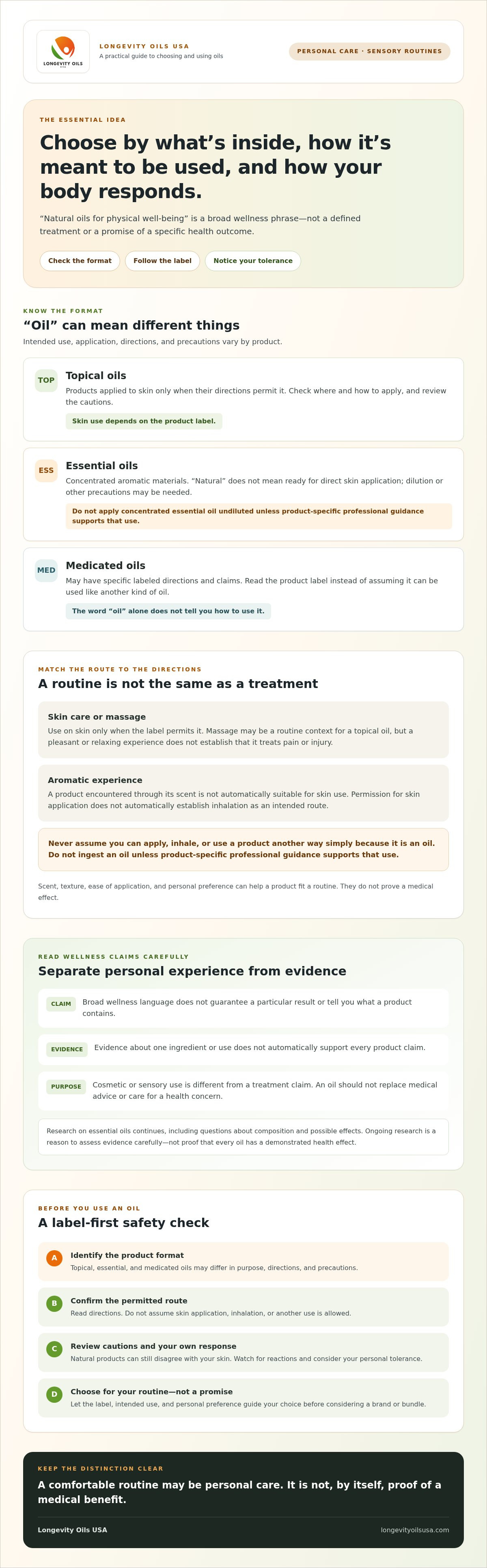
Natural origin alone does not establish safety for every person or use. Suitability depends on the product, how it’s used, and your individual circumstances. A few deliberate checks can help you make an informed choice before adding an oil to your routine.
- Read the label: Review ingredients, warnings, directions, and who the product is intended for.
- Confirm the route: Use it on skin or aromatically only if the label supports that use.
- Patch test where appropriate: Follow the product label and reputable guidance. A patch test can’t guarantee that a reaction won’t occur later.
- Monitor your response: Stop using the product if irritation or an unexpected reaction develops.
What to check before applying an oil to skin
Before applying a product, confirm that it’s intended for skin and check where and how the label says to use it. Concentrated essential oils may require dilution. Don’t guess at a ratio or assume another product’s directions apply. Follow the specific label and seek qualified professional guidance if the instructions leave you uncertain.
Unless a qualified professional advises otherwise, keep oils away from your eyes, mucous membranes, and damaged skin. Store the product as directed, and don’t use it beyond its stated purpose simply because it feels or smells suitable.
When to ask a healthcare professional
Check with a healthcare professional before use if you have known sensitivities, are pregnant, have persistent symptoms, or have other health circumstances that may affect suitability. Individual needs vary, and a professional can help you consider the product alongside your situation.
If a reaction occurs, stop using the oil. Seek appropriate medical advice, especially if symptoms persist or concern you. Don’t use an oil in place of prescribed care or delay an evaluation for an ongoing health issue.
These safeguards apply across formats, including wellness blends, individual oils, and medicated products. Read the directions for the exact item you’re considering. Labels and cautions may differ even among products in the same broad category. A thoughtful routine starts with clear information, careful use, and attention to how your body responds.
To compare options, explore the wellness oil selection and review each product’s ingredients, directions, and cautions before choosing.
Choosing a Natural Oil That Fits Your Well-Being Routine
A good choice starts with your routine, not a broad promise on the front of a package. If you’re considering natural oils for physical well being, first decide what role you want the product to play, such as topical personal care or an aromatic routine. Then compare the format, directions, and cautions with that intended use. Your comfort and personal tolerance matter, too.
A simple checklist for comparing wellness oils
Use these questions to make a needs-first comparison before considering a brand or bundle:
- Does the format fit the routine? Confirm that the product’s label allows your intended route and application.
- Can you assess what’s in it? Review ingredient information and look for clear directions, cautions, and intended-use details.
- Are the claims specific and supported? Consider whether the evidence relates to the exact product, use, and outcome being described.
- Does it suit your circumstances? Take your sensitivities, preferences, and any relevant health considerations into account.
Consider pack format after those checks. A larger pack or set may suit your plans, but size or variety alone doesn’t establish quality, suitability, or benefit. Compare the contents and directions for each item rather than relying only on the bundle description.
Explore wellness oil formats with realistic expectations
Retailers may offer different categories, including wellness oil collections, botanical blends, individual oils, and medicated formats. Longevity Oils USA carries curated wellness oil assortments, along with other oil offerings. The collection name alone doesn’t establish its ingredients, directions, or effects, so check the current product label and any applicable cautions before deciding whether it fits your routine.
Keep expectations grounded. A product may suit your preferred format or become a pleasant part of personal care, but that doesn’t mean it will produce a particular health outcome. If you’re considering botanical oil packs, compare the products included, their labels, and your intended use before choosing a pack format.
Choose by routine, format, directions, and tolerance, then assess claims and packaging. Longevity Oils USA’s wellness oil offerings include collections and other formats, so review the product information that applies to the item you’re considering.
Make Your Next Oil Choice With Care
Choosing natural oils for physical well being starts with clarity, not sweeping promises. Match the product format to the routine you have in mind, check the label for directions and cautions, and consider whether the evidence supports the specific claim. Oils can be part of personal care or a sensory routine, but they shouldn’t replace medical advice or prescribed care.
Topical, essential, and medicated oils aren’t interchangeable. Your preferences and personal tolerance matter, too. Comparing ingredients, intended use, and product information can help you make a more informed choice and set realistic expectations.
Longevity Oils USA offers wellness oil formats, including collection and roll-on options, and the NANOGIZE Signature Wellness Oil Collection. Review the label for each product before use.
Explore the wellness oil collections at Longevity Oils USA and compare product information to find a format that fits your routine.
Frequently Asked Questions
Is it safe to use natural oils on your skin?
It depends on the oil, its formulation, how it’s applied, and your individual sensitivities. Read the product label and follow its directions; “natural” doesn’t mean irritation-free. Some products aren’t intended for skin, and concentrated essential oils may need dilution. If a product is meant for topical use, patch testing according to its instructions may help you notice a reaction, but it can’t guarantee future tolerance. Stop if irritation occurs and ask a qualified professional if unsure.
Can natural oils improve physical well-being?
Some people include oils in personal-care, massage, or aromatic routines, but “physical well-being” can mean many different things. Evidence varies by ingredient, formulation, and use, so general wellness language isn’t proof that a product prevents or treats a condition. Think of oils as optional routine products, not medical treatments. They shouldn’t replace professional advice, prescribed care, or an evaluation for ongoing symptoms.
What is the difference between essential oils and medicated oils?
Essential oils are concentrated aromatic materials, while medicated oils have their own formulations, directions, and intended uses. The terms aren’t interchangeable, and a product’s name alone doesn’t confirm its ingredients or effects. Check the label for the intended route, application directions, cautions, and claims. If any of that information is unclear, verify product-specific details with the manufacturer or a qualified professional before use.
How should you apply natural oils for physical well-being?
First confirm that the product is intended for the route you plan to use, then follow its label exactly. Don’t assume an oil intended for aroma is suitable for skin, or that a topical product can be ingested. If topical use is permitted, follow its application directions and patch-test guidance where appropriate. A patch test can’t guarantee future tolerance. Ask a qualified professional if you’re uncertain about suitability.
Are natural oils proven to relieve muscle or joint discomfort?
Evidence depends on the specific ingredient, finished formulation, and application method. Traditional use or a personal report isn’t the same as strong clinical evidence for a particular product. Be cautious of broad promises, and don’t rely on an oil instead of appropriate care. If discomfort is persistent, severe, or unexplained, consult a healthcare professional for advice rather than delaying evaluation or treatment.
Can you use essential oils without diluting them?
Don’t assume an essential oil is safe to apply undiluted. Concentrated oils can irritate skin, and suitable use depends on the particular oil, product directions, and your circumstances. Follow the label and reputable professional guidance rather than improvising a dilution ratio. If the product doesn’t clearly explain its intended use, contact the manufacturer or a qualified professional before applying it. Stop if an unexpected reaction develops.
What should you look for when choosing a wellness oil?
Look for clear ingredient information, specific directions, relevant cautions, and claims that match the available support. Confirm whether the product is intended for topical or aromatic use, and whether its format fits your routine. Natural or premium wording alone doesn’t prove effectiveness or suitability. If a product makes health-related claims, assess the evidence for that exact product and use, and seek professional advice when needed.