
Managing Chronic Back Pain Without Pills: A Practical 2026 Guide

You don’t have to choose between relying on pills and facing chronic back pain alone. Managing chronic back pain without pills can involve practical, evidence-informed strategies shaped around your health, comfort, and daily life. When pain interrupts sleep, work, or movement, it’s understandable to want relief while feeling unsure which advice to trust.
A non-pill approach doesn’t mean going without support. A clinician can help you understand your options and identify a safe starting point, while a steady routine may build confidence in everyday movement over time. Responses vary, so progress is less about finding one perfect remedy and more about combining suitable steps, noticing how they affect daily function, and adjusting as needed.
This guide explains non-drug approaches commonly used in back-pain care, including structured movement and mind-body strategies. It also offers ways to make them realistic in your routine, when to seek professional guidance, and which symptoms call for urgent care. The goal is a manageable plan that supports function, not a promise of instant relief.
Key Takeaways
- Managing chronic back pain without pills starts with a plan tailored to your symptoms, health history, and daily priorities.
- Compare self-guided steps, supervised care, and complementary comfort practices by their purpose and the support they require.
- Make your routine realistic: choose one manageable change, then notice how it affects everyday function.
- A brief activity and symptom journal can help you discuss patterns and progress with a clinician, but it can’t diagnose the cause of pain.
- Learn which changes in your symptoms warrant a routine appointment and which warning signs call for urgent care.
Managing Chronic Back Pain Without Pills Starts With the Right Plan
Back pain can reshape ordinary moments: getting comfortable enough to sleep, sitting through a workday, or moving with confidence. The experience is personal, too. Two people with similar symptoms may have different limits, priorities, and responses to care. A useful plan starts with how pain affects your life, not with a one-size-fits-all remedy.
Managing chronic back pain without pills doesn’t mean managing it without help. A clinician can assess persistent or changing symptoms and discuss non-drug care. You and your care team can then decide what fits your needs. Pain relief and treatment of an underlying cause aren’t always the same thing.
For a news segment about an approach to back pain, watch this report from TODAY:
What makes back pain chronic, and when should you seek help?
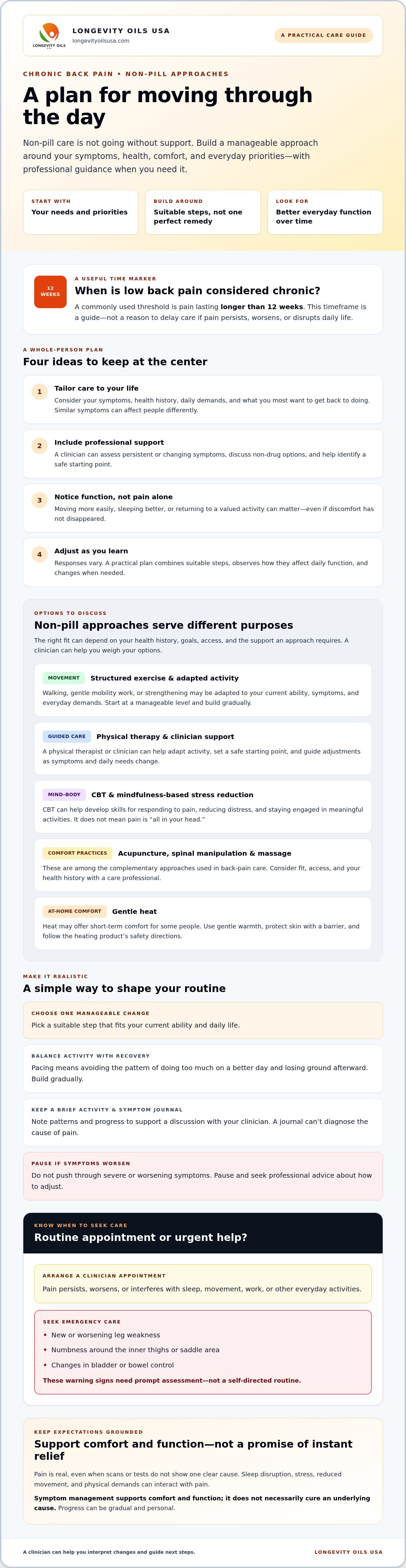
A commonly used threshold for chronic low back pain is pain lasting longer than 12 weeks. The chronic low back pain overview describes how back pain is classified by duration, including acute, subacute, and chronic stages. This timeframe is a guide, not a reason to delay care. Consider an appointment if pain persists, worsens, or interferes with sleep, movement, work, or other everyday activities.
Some symptoms need urgent medical attention. Seek emergency care for new or worsening leg weakness, numbness around the inner thighs or saddle area, or changes in bladder or bowel control. These signs need prompt assessment rather than a self-directed routine.
Why a whole-person approach matters
Pain is real, even when scans or tests don’t reveal one clear cause. Sleep disruption, stress, reduced movement, and the physical demands of daily life can interact with pain and affect how manageable it feels. That doesn’t mean pain is imaginary or solely emotional. It means care may need to consider more than the back itself.
Symptom management supports comfort and function; it doesn’t necessarily cure an underlying cause. Progress may be gradual and personal. Alongside pain intensity, notice practical changes such as moving more easily, sleeping better, or returning to a valued activity. A clinician can help interpret those changes and guide next steps.
Which Non-Pill Approaches Can Support Chronic Back Pain?
There isn’t one approach that suits everyone. Current guidance places structured exercise and individually adapted movement at the center of care. Other options may include physical therapy, cognitive behavioral therapy (CBT), mindfulness-based stress reduction, acupuncture, spinal manipulation, massage, and heat. These approaches differ in evidence, access, and fit, so a clinician can help you weigh them against your health history and goals. Johns Hopkins Medicine also outlines several non-surgical treatments to discuss with a care professional.
A well-rounded care plan may bring together movement, education, and behavioral support, adjusted to the person and their priorities. CBT, for example, isn’t based on the idea that pain is “all in your head.” It can help people develop skills for responding to pain, reducing distress, and staying engaged in meaningful activities.
Movement, physical therapy, and gradual activity
A physical therapist or clinician can help adapt activity to your current ability, symptoms, and everyday demands. Depending on your situation, you might discuss walking, gentle mobility work, or strengthening. Start at a manageable level, then build gradually. Pacing means balancing activity with recovery instead of doing too much on a better day and losing ground afterward. Don’t push through severe or worsening symptoms; pause and seek professional advice about how to adjust.
Progress can mean returning to a valued task, such as preparing a meal or taking a short walk, even if discomfort hasn’t disappeared. This focus on function makes managing chronic back pain without pills more practical than measuring success by pain intensity alone.
Heat, mindfulness, and other supportive strategies
Heat may offer short-term comfort for some people. Use gentle warmth rather than intense heat, protect your skin with a barrier, and follow the heating product’s safety directions. Avoid applying heat to areas with reduced sensation, and ask a clinician if you’re unsure whether it’s suitable for you.
Mindfulness, breathing exercises, or relaxation practices may support coping and ease tension, though they can’t promise pain elimination. Manual therapies, including spinal manipulation or massage, may suit some people as part of a broader plan. Benefits and suitability vary, and these therapies shouldn’t replace movement or necessary assessment. Ask a qualified clinician about their risks and likely value for your circumstances.
If you’re considering a topical wellness oil as an optional comfort ritual, check its current label and safety directions first. Wellness oils are not treatments for chronic back pain or substitutes for evidence-informed care. You can explore wellness oil options while keeping clinical guidance at the center of your plan.
How to Choose a Non-Pill Back Pain Strategy That Fits You
Choosing a strategy isn’t about finding one “natural” remedy to replace a pill. It’s about matching support to your goals, health history, symptoms, preferences, and access to care. The U.S. Department of Veterans Affairs overview of non-drug approaches to chronic pain describes options that can be considered as part of a broader plan. Discuss suitability with a clinician, especially if symptoms are changing or you have other health conditions.
Use this comparison to start a conversation, not to diagnose yourself or decide that one approach is right for everyone.
| Approach | Potential goal | Effort and support |
|---|---|---|
| Self-management | Build regular movement or a calming routine into daily life. | Requires consistency and adjustment; ask a clinician how to begin if you’re uncertain. |
| Supervised care | Address mobility or function with a plan tailored to your needs. | Involves appointments and guided practice, such as working with a physical therapist. |
| Complementary comfort practices | Support short-term comfort or relaxation. | May be simple to try, but suitability and evidence vary; don’t treat them as a substitute for assessment or function-focused care. |
Match the approach to your main goal
Start by naming what you most want to change. If reaching, walking, or household tasks feel difficult, ask whether an adapted activity plan could help you work toward those goals. If poor sleep or stress is part of the picture, discuss behavioral support and a calming bedtime routine. For temporary comfort, a measure such as gentle warmth may have a different role from ongoing work intended to support movement and daily function.
Managing chronic back pain without pills can involve more than one category of support. A realistic plan may combine self-directed habits with professional guidance, then change as your needs or responses become clearer.
How to assess complementary topical products
Topical oils shouldn’t be presented as proven treatment for chronic back pain. Before considering one as an optional comfort practice, check its current label for ingredients, directions, cautions, and intended use. Don’t assume a product is suitable simply because it’s topical or described as natural.
If you have sensitive skin, use other products or medicines, or aren’t sure what a symptom means, ask a clinician or pharmacist before use. If you choose to explore topical wellness oils, review wellness oil options independently of decisions about clinical care.
Build a Safe Daily Routine for Managing Chronic Back Pain
A useful routine should fit your real day, not demand a complete lifestyle overhaul. Begin by noticing what is hardest right now, such as getting moving in the morning, sitting through work, or sleeping comfortably. Choose one manageable adjustment, try it consistently, and review whether it supports the function you care about.
For some people, a routine might include comfortable movement, planned breaks from prolonged sitting, a steady wind-down before bed, and time to recover between demanding tasks. These are options to adapt, not a prescribed checklist. If you have other health conditions, significant limitations, or uncertainty about safe activity, ask a clinician for guidance before making changes.
Start small and pace activity
Set a realistic activity goal based on your current ability. If symptoms or health conditions make the right starting point unclear, a clinician or physical therapist can help tailor it. Pacing means spreading activity and recovery through the day rather than doing too much when you feel better and then avoiding movement for long stretches.
Adjust gradually. For example, you might break a household task into smaller parts or alternate a period of comfortable movement with a planned rest. Consistency matters more than intensity. If an activity causes marked or lasting worsening, scale it back and ask for advice instead of pushing through.
Track function and review the plan
A brief journal can help you see how your routine fits your life. Keep the notes simple and focused on function, not on finding a diagnosis:
- What movement or everyday task you tried, and how manageable it felt.
- Whether pain disrupted sleep or changed your usual activity.
- What seemed to help, what felt difficult, and any new symptoms.
Use these notes to discuss patterns with a clinician. A diary can’t identify the cause of back pain, but it can make it easier to explain what’s changing and what you hope to do more comfortably. Set a check-in with your care professional at a suitable time to review what’s helping, what isn’t, and whether the plan needs adjusting.
Pause an activity and seek clinical advice if new symptoms appear or your pain becomes markedly worse. A sustainable approach to managing chronic back pain without pills leaves room to adapt as your needs change. If an optional topical comfort ritual is part of your routine, check the product’s current label and safety directions; it isn’t a back-pain treatment. Explore wellness oil options separately from decisions about clinical care.
When to Get Professional Support, and Where Wellness Oils Fit
Choosing a non-pill approach doesn’t mean handling back pain alone. Pain that persists, changes, worsens, or interferes with daily life deserves individualized assessment, even if you prefer to avoid medication. A clinician can help consider possible causes, review suitable care options, and decide whether follow-up is needed. Seek emergency care for new or worsening leg weakness, numbness around the saddle area, or a change in bladder or bowel control.
For symptoms without those emergency warning signs, book a routine appointment if pain isn’t improving, limits your usual activities, or keeps returning. Bring a short record of what affects your movement, sleep, or daily tasks. That context can make a conversation about managing chronic back pain without pills more specific and useful.
Questions to bring to a clinician or physical therapist
Arriving with a few questions can help you leave with clear next steps. Consider asking:
- Which activities are appropriate for me, and how should I increase them safely?
- Are there warning signs I should watch for, and what should I do if they appear?
- What might be contributing to my symptoms, and when should I follow up?
- Which non-drug options fit my health history and goals, such as sleeping better or moving more comfortably?
Your care professional can help weigh the effort, suitability, and likely role of different options. You don’t need to commit to every suggestion at once. A plan can begin with practical steps and be adjusted as you learn what supports your function.
Use topical wellness products cautiously
Some people may choose a topical wellness or medicated oil as an optional sensory or comfort ritual. Don’t treat it as a proven treatment for chronic back pain or a replacement for clinical assessment and evidence-informed care. Product ingredients, intended uses, directions, and cautions can differ, so read the current label rather than assuming how a product should be used.
If you have sensitive skin, use other medicines or topical products, or have questions about a symptom, check with a clinician or pharmacist before use. Stop using a product if you experience an unexpected reaction, and seek appropriate advice.
For general product education, you can read this guide to medicated oils for muscle and joint soreness. Use it as background information, not as a recommendation to treat back pain; follow verified label directions and keep your clinician involved in decisions about care.
Take Your Next Step Toward Steadier Back Care
Managing chronic back pain without pills is best approached as a personal, adaptable plan, not a search for one remedy. A clinician can help you choose appropriate non-drug options, while gradual activity, pacing, and tracking everyday function can help you understand what supports your goals.
Keep the plan realistic. Start with a manageable change, review how it affects daily life, and adjust with professional guidance. Persistent, worsening, or changing pain deserves assessment, and urgent warning signs should never be managed with self-care alone.
Wellness oils may be an optional comfort ritual, but they aren’t treatments for chronic back pain or substitutes for clinical care. Longevity Oils USA offers wellness and medicated oil formats, including roll-ons; check current product labels for ingredients, directions, cautions, and intended use. Explore Longevity Oils USA’s wellness oil offerings for general product information, and consult a clinician with questions about personal suitability.
Small, thoughtful steps can help you build a routine that feels more manageable. Keep learning, stay attentive to your body, and seek support as your needs evolve.
Frequently Asked Questions
Can chronic back pain improve without pills?
Yes, some people manage symptoms and improve daily function with non-drug care, though results vary and improvement isn’t guaranteed. A plan may include adapted movement, physical therapy, pacing, or behavioral support, chosen with a clinician to suit your health and goals. Managing chronic back pain without pills doesn’t mean going without care; seek assessment for persistent, worsening, or disruptive pain and review the plan as your needs change.
What is the best non-drug treatment for chronic back pain?
There isn’t one best option for everyone, but structured exercise has the strongest support among non-drug approaches for chronic low back pain. A clinician or physical therapist can help tailor activity to your ability and symptoms. Depending on your needs, care may also include education, cognitive behavioral therapy, mindfulness, or other supportive approaches. The most suitable plan is one you can follow safely and adapt over time.
Can walking help manage chronic lower back pain?
Walking may be a useful way to stay active for some people with chronic lower back pain, but the right amount depends on your symptoms and overall health. Begin at a comfortable level, consider shorter walks or breaks, and increase gradually if tolerated. Don’t push through severe or worsening pain. If you’re unsure how to start, or walking consistently aggravates symptoms, ask a clinician or physical therapist for guidance.
Is heat or ice better for chronic back pain?
Neither is best for everyone. Gentle heat may offer temporary comfort for some people, while a wrapped cold pack may feel soothing to others, such as after an activity-related flare. Protect your skin, follow product safety directions, and avoid extreme temperatures or prolonged direct contact. If you have reduced sensation, skin concerns, or uncertainty about using heat or cold safely, check with a clinician before trying either.
When should I see a doctor for chronic back pain?
Arrange a routine medical assessment if back pain persists, worsens, keeps returning, or interferes with sleep, work, movement, or everyday tasks. A clinician can review your health history, assess symptoms, and discuss appropriate non-drug care, including whether physical therapy may fit your goals. Seek advice sooner if your symptoms change or you’re uncertain what activity is safe. You don’t need to wait until pain becomes severe to ask for help.
What are the warning signs that back pain needs urgent care?
Seek emergency care for new or worsening leg weakness, numbness around the saddle area, or new changes in bladder or bowel control. These symptoms need prompt assessment rather than a home routine or topical product. If back pain is rapidly worsening or accompanied by other concerning changes, contact a medical professional promptly for advice on the appropriate level of care. When in doubt about an urgent symptom, err on the side of seeking help.
Can topical oils help with back discomfort?
Topical oils may be an optional sensory or comfort ritual, but they shouldn’t be treated as proven treatment for chronic back pain or as a replacement for medical assessment. Product ingredients, intended uses, and directions vary, so read the current label and follow its safety instructions. Ask a clinician or pharmacist about sensitivities, other products or medicines you use, or whether a product is suitable for you.